

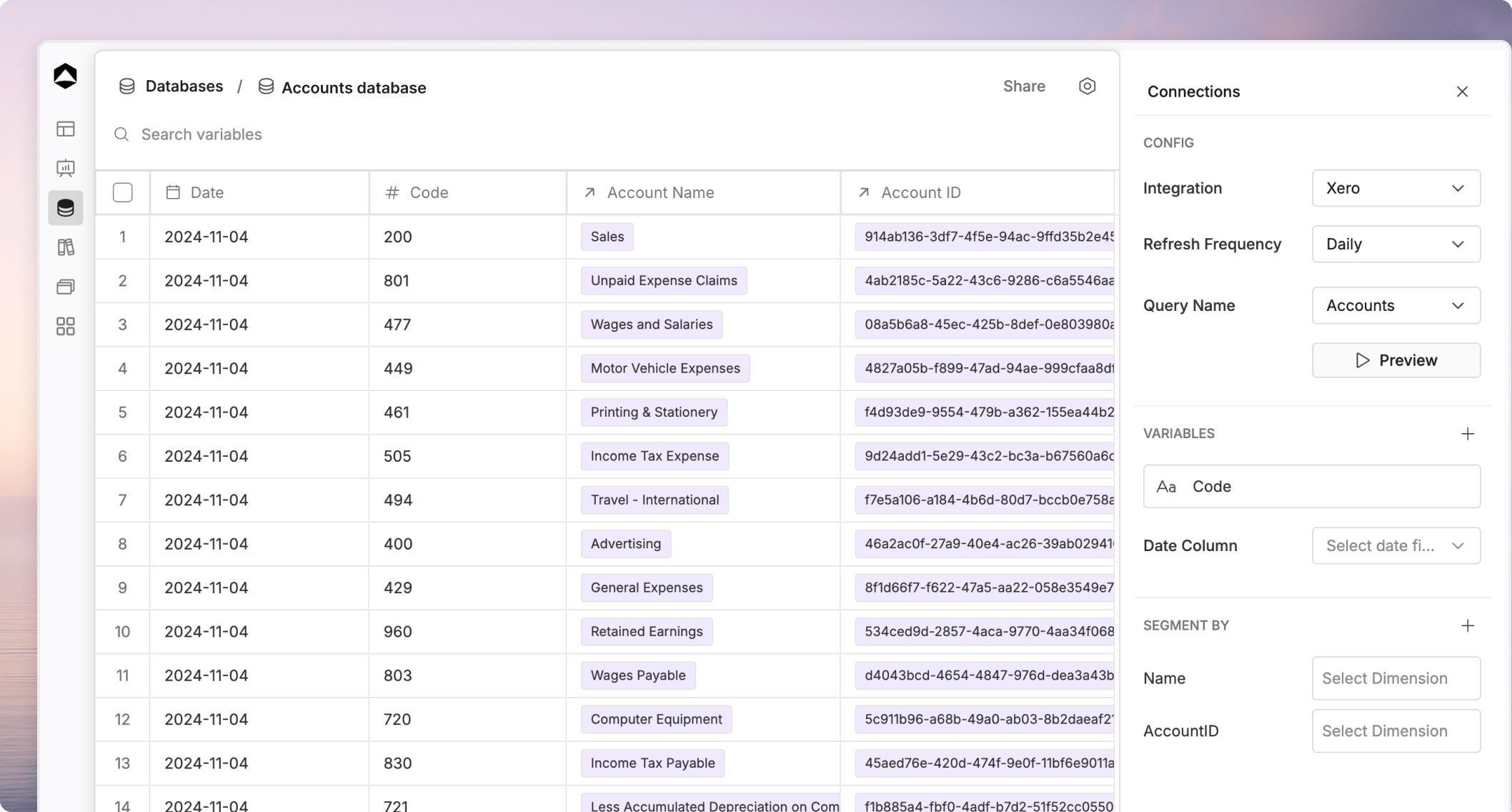
Why databases matter
Databases help you:- centralize source records
- keep raw data separate from planning logic
- refresh data from integrations and queries
- reuse the same source data across several downstream workflows
- reduce manual re-entry when multiple teams rely on the same records
Where databases fit in Oculon
Think of databases as the source layer in the Oculon workflow:Databaseshold source records and imported data.Modelsapply calculations, assumptions, and planning logic.ViewsandBoardshelp teams review the result.
Common ways to create a database
The current Oculon docs show two common creation paths:Manual database: create and manage the structure directly in OculonQuery-backed database: create a database from an integration query so the source can refresh over time
Database versus model
Use a database when you need row-level records, imported source data, or operational detail. Use a model when you need:- calculations and formulas
- scenarios and planning assumptions
- time-aware logic
- outputs designed for planning and decision-making
What databases usually feed
A well-structured database can later feed:- model inputs
- dimension mappings
- linked records and shared reporting inputs
- board tables and supporting analysis