

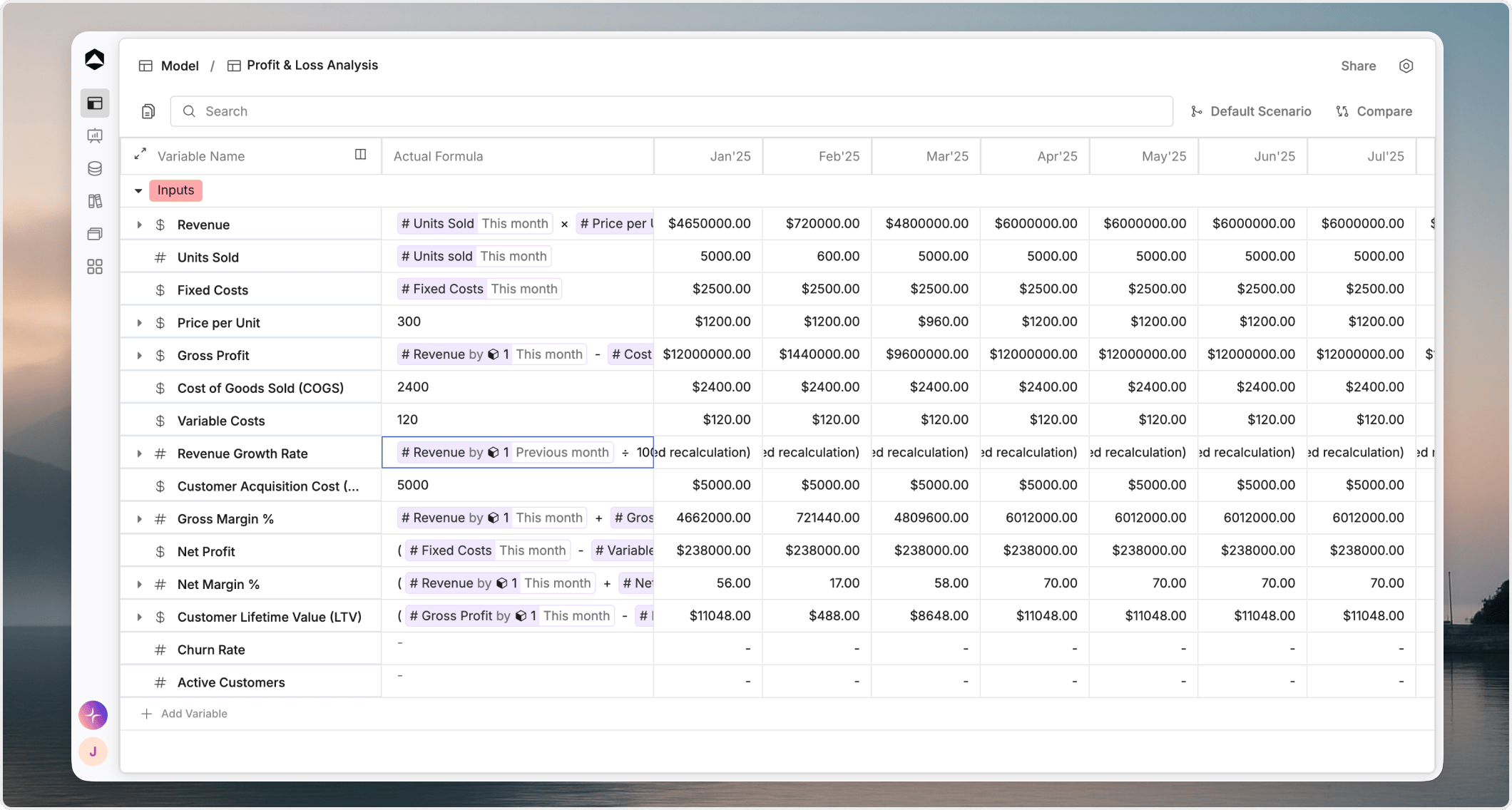
A model is the core planning workspace in Oculon. It brings together variables, formulas, time settings, dimensions, scenarios, and linked data so you can build and review planning logic in one place. Model details panel in Oculon

What lives in a model

A model usually includes:
  • input variables and business assumptions
  • calculated logic and outputs
  • a model date range and time granularity
  • dimensions where extra analysis is needed
  • scenario-ready planning structure
The model is where planning logic becomes reusable. If you build it well once, the same structure can support reporting, scenario review, and board-level communication.

Model versus other surfaces

Each planning surface in Oculon serves a different purpose:
  • use a database for source records and row-level detail
  • use a variable for one metric or assumption inside the model
  • use a board to present and monitor results
  • use a view to filter, group, and compare outputs
The model is the layer that connects those pieces into one planning system.

Why models matter

A model gives teams one place to define how the business plan should behave. That matters because formulas, reporting, scenario work, and review workflows all depend on the same underlying logic.